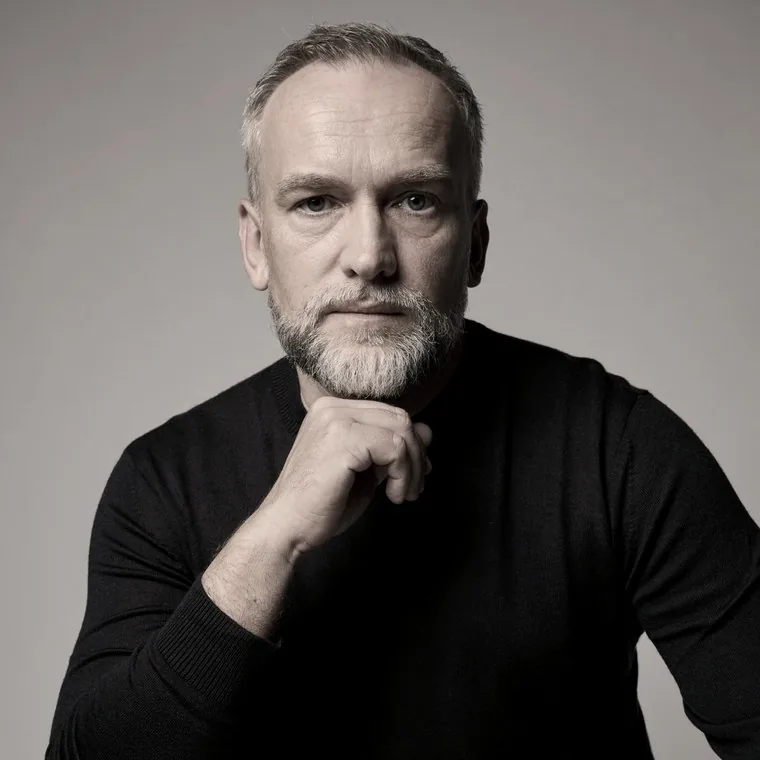
Operating partner to founders, CEOs, and boards

The work that keeps returning
to your desk rarely belongs to
one function.

I step in when a question, decision, or initiative crosses the company and no existing role has the context or capacity to own it end to end.

I build the full picture, pressure-test the assumptions, and carry the work through execution.

It comes off your desk.

Yuri Papadin

Yuri Papadin

LinkedIn

Great technology does not exempt a company from seeing itself clearly.

The operating gap opens as a company moves from research toward adoption, typically between post-seed and Series B, and encounters a class of questions and decisions its founders have not faced before.

How do you give the board an honest account of performance without weakening conviction in the company?
How do you position the company credibly in the market, building on its real advantages rather than explaining away the competition?
How do you scale against the constraints the company actually has, rather than those assumed in the plan?
What is keeping you awake and who can you say it to without any edits?

The gap widens when technology becomes the primary frame through which every signal is interpreted, leaving leadership slow to recognize what customers, the market, and the organization are already showing them.

The gap narrows when leadership has an independent counterpart. Someone with enough context to connect those signals, test the thesis against evidence, and determine whether the proposed path is the strongest one available. Investors and boards become far more effective when leadership can give them a clear account of the company’s current state, the decisions at stake, and the consequences of each path.

Judgment is seeing the second and third consequence before making the first decision.

Market need

Whether the technology addresses a core market demand, or primarily demonstrates technical capability with weak market potential

Traction quality

Whether the traction is durable, or conceals weak stickiness, fragile economics, unclear demand and pricing, and no clear customer profile

Second-order effects

How new customers and new product commitments change future deployment, support, pricing, capital requirements, and market position

Operating model

Whether the organization reflects the company's actual stage and its capacity to scale to the targets it has set

Strategic optionality

Which decisions are being avoided or deferred today, and which of tomorrow's strongest options they quietly remove

Board and VC reality

What is already evident inside the company, has not yet surfaced upward, and will have to be confronted eventually

Evidence

decision.then().then().then()

I have seen companies from every side of the table. The underlying patterns repeat.

Built and operated

I co-founded Odos and served as COO for 4.5 years, scaling the company from a terminal window to financial market infrastructure used by millions of wallets and responsible for more than $110 billion in routed volume globally. My role spanned executive leadership, finance, product, operations, marketing, board governance and company wind down. Previously I held operating roles at three early-stage companies across fintech, aerospace, and automotive. I continue to serve on the Board.

Evaluated and transacted

My career spans 15 years of corporate development, M&A, and business integration across enterprise data security, telecommunications, automotive retail, and consumer markets. I have worked at public companies including CDK Global, Polycom, and Imperva, as well as private companies including Social Discovery Ventures. I led deal sourcing, financial modeling, diligence, negotiation, closing, and post-close integration planning and execution across more than 35 completed M&A transactions.

Advised and observed

As an EIR at Plug and Play Accelerator and The Angels Forum, I have evaluated hundreds of companies, conducted venture diligence, and worked with founders on product-market fit, go-to-market strategy, monetization, and fundraising. I have seen technology without demand, ambition without substance, traction without repeatability, and organizations built for the company presented to investors rather than the company that actually existed.

Let’s connect on LinkedIn →

Direction from inside the problem, not advice from the edge.

CEO and leadership counterpart

The work begins with what is keeping you awake. I build a clear view of what is happening, identify the decisions beneath the symptoms, and give leadership a coherent view of the options and their implications. A standing counterpart for questions with no obvious owner and no safe internal audience.

Capital and transactions

Financing, strategic partnerships, M&A, and special situations shaped with equal attention to the operating reality they create after the agreement is signed.

Strategy and sequencing

Competing priorities turned into an executable order: what must happen now, what can wait, and what should stop. I begin with the financials, metrics, pipeline, retention, and unit performance because the strategy a company wants and the strategy its numbers support are frequently different.

Product direction

Technical capability translated into customer value, credible positioning, sustainable economics, and a roadmap the company can deploy and support.

Cross-functional execution

Decisions carried across product, go-to-market, finance, operations, and organization until the dependencies, tradeoffs, owners, and intended outcome are explicit.

Board effectiveness

Accurate and complete materials, resolutions drafted to hold up, decisions documented, and no gap between what the board is shown and what the company knows. A board can exercise its fiduciary duty only on the information it receives.

Major company change

Holding the company together through a founder transition, executive gap, pivot, restructuring, or any period when the operating system that brought the company here no longer fits.